Choosing between a Mechanical vs Hall Effect keyboard is essential for gamers seeking optimal performance today. Understanding the key differences in a Mechanical vs Hall Effect comparison helps you upgrade your setup. Still missing shots or feeling inconsistent input in games? A comparison may reveal the underlying cause of your gameplay issues.
In 2026, competitive players often analyze the keyboard debate while choosing their next setup. But are magnetic switches actually better, or just different?
This guide breaks down how both technologies perform, helping you decide which model fits your needs. While some might think of them with the precision of mechanical engineering, keyboards are ultimately about personal preference.
The Mechanical vs Hall Effect Comparison Details
| Feature | Mechanical Keyboard | Hall Effect Keyboard |
|---|---|---|
| Actuation | Physical metal contact | Magnetic sensing (contactless) |
| Trigger Behavior | Fixed actuation point | Adjustable actuation (on supported models) |
| Typing Feel | Linear, tactile, clicky options | Smooth, consistent linear travel |
| Sound | Influenced by switch, keycaps, stabilizers, case structure, and internal dampening | Mainly influenced by keycaps, stabilizers, case structure, and bottom-out impact |
| Durability | Long lifespan, physical contact wear over time | No physical electrical contact in switches, reducing internal wear |
| Customization | Hardware modifications (switches, keycaps, mods) | Software-based input tuning and actuation control |
| Best For | Typing, customization, general gaming use | Competitive gaming and input precision tuning |
What Is a Mechanical Keyboard?
A mechanical keyboard uses individual physical switches under each key. When pressed, metal contacts complete an electrical circuit to register input.
Key characteristics:
- Multiple switch types (linear, tactile, clicky)
- Strong physical feedback
- Extensive hardware customization options
Mechanical keyboards are widely used by users who value typing feel, sound variety, and customization flexibility for tasks like visual studio code editing.
For example, the MCHOSE UT98 is a mechanical keyboard equipped with silent switches, while the K99 V3 offers hot-swappable switches for gaming.

What Is a Hall Effect Keyboard?
A Hall Effect keyboard uses magnetic sensors to detect key movement instead of physical contact, offering unique advantages compared to mechanical variants.
Because it tracks key travel distance, it enables features such as:
- Adjustable actuation points (on supported models)
- Rapid Trigger behavior for faster key reset
- Consistent input detection over time
These features are designed primarily for performance-focused gaming scenarios, much like checking acoustics when setting up wedding venues. Understanding the Mechanical vs Hall Effect landscape allows gamers to pick the right tool for these needs.
For example, the MCHOSE Ace 68 GT is a Hall Effect keyboard designed for fast response and competitive input behavior.

Gaming Performance Differences
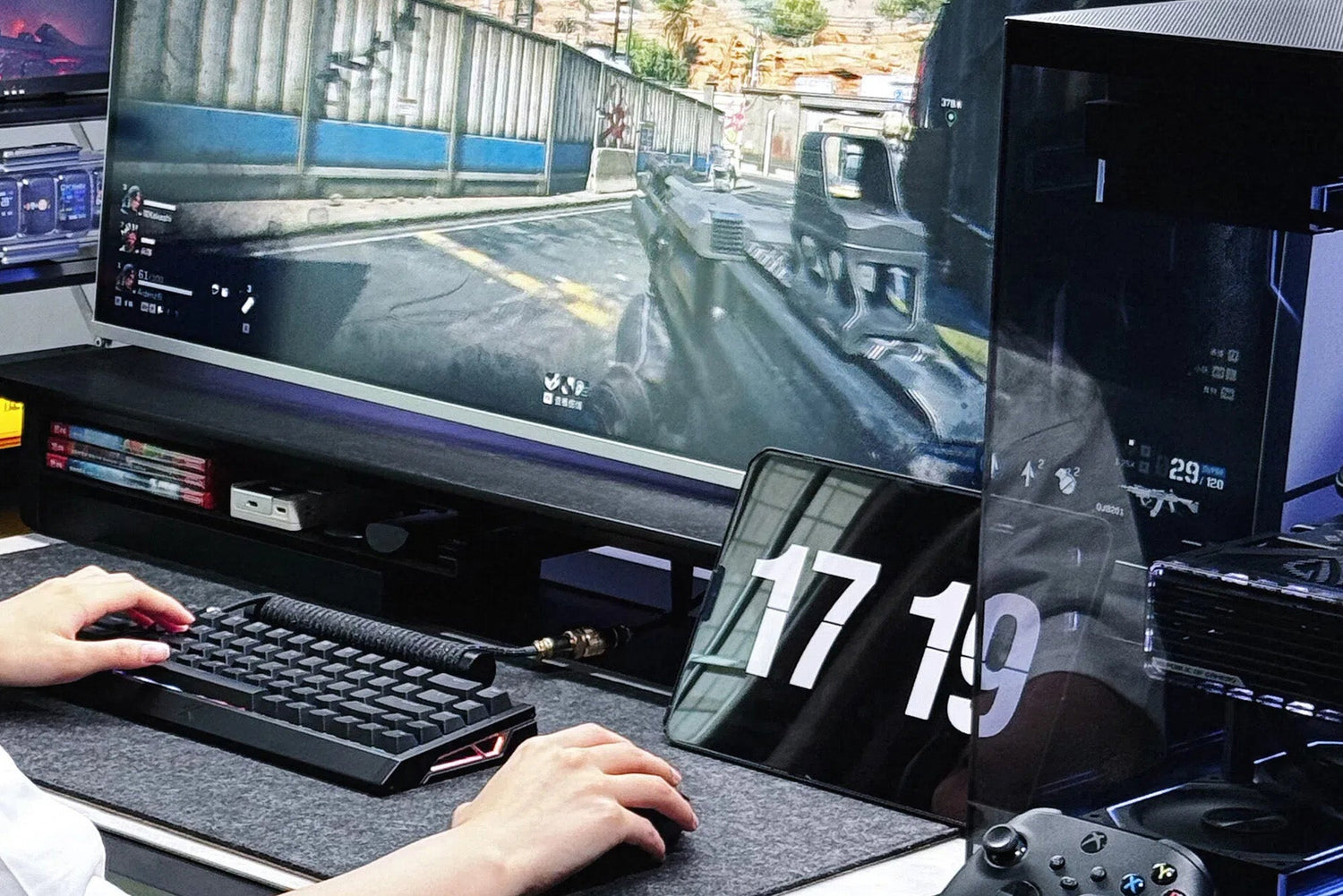
Hall Effect keyboards are most noticeable in competitive FPS games such as Valorant or CS2.
Potential advantages include:
- Faster key reset behavior for movement control
- Reduced accidental inputs with adjustable actuation
- More consistent input timing in high-speed scenarios
Mechanical keyboards still perform reliably across most gaming genres, but rely on fixed actuation behavior.
In casual or non-competitive gaming, the Mechanical vs Hall Effect differences are generally less noticeable to the average user. Choosing between these types remains a key part of your gaming Mechanical vs Hall Effect decision process.
Typing Feel and Sound
Mechanical keyboards:
- Wide range of switch options
- Distinct sound profiles depending on build quality
- Strong tactile or audible feedback
Hall Effect keyboards:
- Smooth and consistent key travel
- Sound depends more on case structure and keycaps
- Less variation in switch feel
MCHOSE Mechanical Switches Overview
|
Switch Name |
User Feel Description |
Detailed Description & Suitable Users |
|
Icy Creamsicle |
Creamy |
Smooth/refined feel. Ideal for soft, light typing. |
|
Hyacinth |
Thocky |
Deep, rich “thocky” sound with strong rebound. |
|
Matcha Latte |
Creamy |
Crisp, elastic feel with satisfying depth. |
|
Speed Gold V2 |
Thocky |
Ultra HiFi profile for competitive gamers. |
|
Cream Shaft |
Creamy |
Stable, gentle, and quiet typing experience. |
|
Cabbage Tofu V2 |
Poppy |
Crisp, poppy feedback with clear output. |
|
Vintage White |
Thocky |
Pronounced low frequencies for smooth elasticity. |
|
Ice Blue Switch |
Poppy |
Bright, lively, and clear acoustic feedback. |
This difference is largely based on personal preference rather than performance.
For users who want control, models like the K99 V3 extend functionality. With MCHOSE M HUB, it supports 148 shortcuts for productivity, making it suitable for both work and gaming.
Durability and Maintenance
Mechanical keyboards:
- Physical contact in switches leads to wear.
- Easier to repair and modify (hot-swappable models).
Hall Effect keyboards:
- Contactless sensing reduces mechanical wear.
- Hardware modification options are limited.
Customization
Mechanical keyboards:
- Switch replacement (hot-swappable models)
- Keycap customization
- Acoustic mods (foam, stabilizers, lubrication)
- Firmware tuning (QMK/VIA, MCHOSE HUB)
Hall Effect keyboards:
- Adjustable actuation points
- Rapid Trigger tuning
- Advanced input configuration (SOCD, MT, TGL)
Hardware customization defines the user experience, often serving as a central point in discussions.
Durability and Maintenance
Mechanical keyboards:
- 50M–100M keystroke lifespan
- Physical contact leads to gradual wear
- Easier to repair and modify
Hall Effect keyboards:
- Contactless sensing reduces mechanical wear
- Higher long-term consistency
- More complex internal repair structure
Which One Should You Choose?
Choose a mechanical keyboard if:
- You care about typing feel and sound
- You want full hardware customization
- You use your keyboard for both work and gaming
Choose a Hall Effect keyboard if:
- You play competitive FPS or fast-paced games
- You want adjustable input sensitivity
- You prioritize speed and consistency
Product Recommendations
- K99 V3 – Mechanical keyboard with hot-swappable switches.
- Ace 68 Turbo – Hall Effect keyboard designed for speed and rapid input reset.
Final Thoughts
Mechanical keyboards remain a strong choice for typing experience, customization, and general use.
Both are valid options the best choice in the Mechanical vs Hall Effect landscape depends entirely on your specific use case.
FAQ
Are Hall Effect keyboards better for gaming?
They can offer advantages in competitive FPS games with Rapid Trigger and adjustable actuation.
Are magnetic keyboards faster than mechanical keyboards?
They may provide more responsive input in certain configurations.
Do Hall Effect keyboards last longer?
Yes, because they do not rely on physical switch contacts.
Can mechanical keyboards still be used for gaming?
Yes. They remain widely used and perform well across all game types.